The short answer
Both work on the same principle, deep pressure stimulation, which is the calming effect of gentle, evenly distributed weight on the body.
A weighted blanket covers the whole body and suits sleep, so it is the better choice for settling at bedtime. A weighted toy is portable, sits on the lap or chest, and can be carried to school, the car or a waiting room, so it suits daytime regulation and travel.
For children, a weighted toy is usually the easier starting point: lighter, less overwhelming, and something they will actually want to hold.
WEIGHTED TOY VS WEIGHTED BLANKET AT A GLANCE
| Weighted toy | Weighted blanket | |
|---|---|---|
| How it works | Deep pressure stimulation | Deep pressure stimulation |
| Best for | Daytime calm, travel, transitions | Settling at bedtime, staying asleep |
| Portable | Yes, carried anywhere | No, stays on the bed |
| Coverage | Lap, chest or arms | Whole body |
| Suits younger children | Usually the easier first step | Can feel heavy or confining |
| Doubles as a comfort object | Yes | Not really |
You've probably heard of weighted blankets by now, they've been all over social media for a few years, with people raving about how they finally got a good night's sleep. But weighted toys? That's a newer conversation, and one worth having.
Both use the same core science. Both can calm a racing mind or an overstimulated nervous system. But they work in different ways, suit different situations, and serve different needs. So how do you know which one, or whether both are right for you or your child?
In this blog post, we’ll cover the science behind why weighted products work, break down how weighted blankets and weighted toys each deliver their benefits, explore who can benefit most from each, and help you figure out which option or combination is the right fit for you or your family.
What Makes Weighted Products Work?
Before we compare the two, it helps to understand why weighted products work at all. The answer lies in something called deep pressure stimulation (DPS), sometimes also called deep touch pressure therapy.
Deep pressure stimulation is a type of firm but gentle pressure applied to the body. Think of the feeling of a long hug, being wrapped in a snug blanket, or the reassuring weight of a hand on your shoulder. That pressure does something remarkable to your nervous system.
Research shows that deep pressure stimulation activates the parasympathetic nervous system, the part of your nervous system responsible for “rest and digest” mode. It signals to your brain that you are safe. As a result, your body lowers its production of cortisol (the stress hormone) and increases its release of serotonin and dopamine, the feel-good chemicals that regulate mood, focus, and calm.
In other words, deep pressure doesn't just feel comforting. Research suggests it can influence physiological responses associated with relaxation, stress regulation, and emotional wellbeing.
Both weighted blankets and weighted toys deliver this kind of pressure. They just deliver it differently.

What Is a Weighted Blanket?
A weighted blanket is exactly what it sounds like, a blanket that’s heavier than a standard one, typically filled with glass beads, plastic pellets, or similar materials to add even, distributed weight across the body.
They’re usually recommended at around 10% of the user’s body weight, though guidelines vary. Most range from 2kg to 11kg or more.
Many people use weighted blankets because the gentle pressure can create a feeling of comfort and security. This sensation is often referred to as deep pressure stimulation, a type of touch that may help the body relax and unwind.
Research into weighted blankets has grown over the past two decades. Studies have found that many users prefer weighted blankets over standard blankets and may experience reduced signs of stress and anxiety while using them. Weighted blankets have shown promising results for improving sleep quality and reducing insomnia symptoms in some studies.
While individual results can vary, these findings suggest that weighted blankets may be a useful tool for supporting relaxation and better sleep as part of a healthy bedtime routine.
Weighted blankets tend to work best for:
• Winding down at night and improving sleep quality
• Managing generalised anxiety in adults
• Sensory processing difficulties where full-body input is calming
• Adults and older children who can safely manage the weight themselves
Important note: weighted blankets are not recommended for very young children, particularly under three years of age, due to safety concerns around restricted movement and breathing. Always follow age and weight guidelines, and consult your child’s healthcare provider if you’re unsure.
What Is a Weighted Toy?
A weighted toy is a soft, huggable toy, often an animal or character, that contains added weight to provide deep pressure stimulation through holding, squeezing, and cuddling. Unlike a blanket, the pressure is more targeted and comes through the act of actively holding or hugging the toy rather than lying under it.
This might sound like a small difference, but it changes everything about how and when the tool can be used.
When you hug a weighted toy, the deep pressure may encourage relaxation in a similar way to a weighted blanket, but you also engage additional sensory pathways. Research on human touch and connection has shown that comforting physical contact can be associated with oxytocin release, a hormone linked to feelings of safety, trust, and wellbeing. While a weighted toy isn't the same as a human hug, many people find that holding something soft and weighted can create a similar sense of comfort and grounding.
For children especially, weighted toys serve a dual purpose. They deliver sensory input through the joints and muscles (what therapists call proprioceptive feedback) and they also support emotional regulation through imaginative play. A child who carries their favourite weighted toy isn't just receiving sensory input. They're also engaging their imagination, developing a sense of companionship, and practising self-soothing strategies in a way that feels natural rather than clinical.

Sensory integration therapy emphasises the role of proprioceptive and tactile input in helping children (and adults) regulate their nervous systems, and weighted toys may provide an accessible way to incorporate proprioceptive and tactile sensory input into everyday routines.
Weighted toys tend to work best for:
• Children and toddlers who need daytime sensory support
• Managing anxiety, overstimulation, or emotional dysregulation in real-time
• School, travel, or any situation where a blanket isn’t practical
• People who want comfort through the act of hugging rather than lying still
• Anyone who connects emotionally with a tactile, comforting companion
Do You Need Both?
The short answer? You might.
Weighted blankets and weighted toys aren’t in competition, they actually complement each other beautifully. Think of them as two tools in the same toolkit, each with a specific job.
A weighted blanket is your night-time anchor. It sets the scene for sleep, keeps your nervous system settled through the night, and provides that deeply satisfying full-body pressure when you most need to slow down.
A weighted toy is your daytime companion. It travels with you. It goes to school. It sits on the couch during an overwhelming afternoon. It gets picked up and hugged during a meltdown, a hard moment, or simply a moment where someone needs to feel safe.
For children with sensory processing difficulties, anxiety, or ADHD, and honestly, for many adults too, having both gives you coverage across the whole day.
Who Can Benefit Most?
Weighted products aren’t just for one type of person, and that’s part of what makes them so widely loved. While they were first studied in clinical and therapeutic settings, the benefits of deep pressure stimulation extend well beyond any single diagnosis or age group.
Some of the people who tend to find weighted tools most helpful include:
• Children with autism spectrum disorder (ASD): sensory sensitivity and difficulty self-regulating are common in ASD, and deep pressure has been shown to support a calmer, more settled state.
• Children and adults with ADHD: proprioceptive input (the kind you get from hugging a weighted toy) may help improve focus and reduce restlessness.
• People with anxiety: the parasympathetic response triggered by deep pressure makes weighted products a practical, drug-free tool for managing everyday anxiety.
• Those with sensory processing disorder: weighted tools provide the kind of organising sensory input that helps the nervous system feel regulated and grounded.
• People with insomnia or disrupted sleep: weighted blankets in particular have strong evidence for improving sleep quality and reducing the time it takes to fall asleep.
• Older adults: comfort, warmth, and gentle pressure may ease agitation and support a sense of calm, particularly for those living with dementia or chronic pain.
• Anyone going through a high-stress period: you don’t need a diagnosis to benefit. Many people simply find weighted products deeply comforting during stressful life seasons.

Meet Kenny the Kunzea Koala
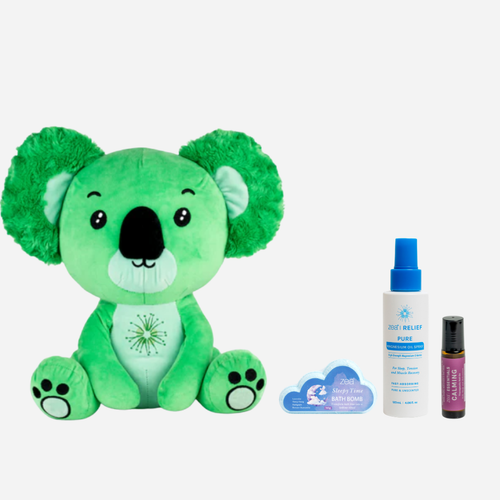
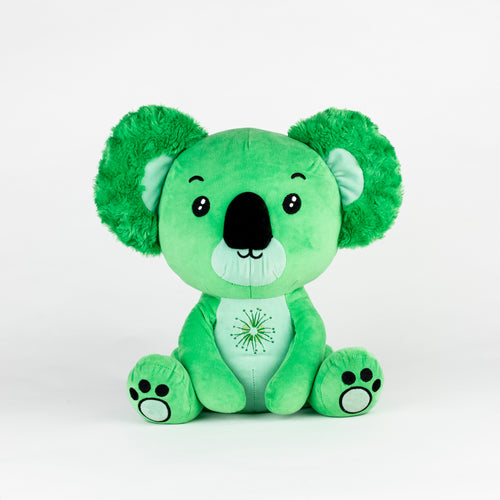
If you’re looking for a weighted toy that brings together all of the above; deep pressure, portability, emotional warmth, and the kind of quality that lasts, meet Kenny the Kunzea Koala.
Kenny is Zea’s very own weighted plush koala, thoughtfully designed with Australian families in mind. He comes in two sizes; Large and Extra Large, giving you options depending on whether you need a snuggle-ready companion for a little one or a more substantial weighted hug for an older child or adult.
Kenny’s weight is distributed evenly through his body, making him perfect for hugging, cuddling on a lap, or squeezing during moments of sensory overload or big emotions. He’s soft enough to be comforting, weighted enough to be grounding, and cute enough to be loved.
He’s the kind of tool that doesn’t look like a tool, which matters enormously, especially for children who don’t want to feel different or singled out.
The Bottom Line
Weighted blankets and weighted toys both work, and the science behind them is solid. They both tap into deep pressure stimulation, both support your nervous system, and both can make a real difference to how you or your child moves through the day (and night).
The right choice depends on when and where you need support most. If it’s sleep and evening calm, a weighted blanket is your best friend. If it’s daytime regulation, portability, and comfort that travels, a weighted toy is the answer. And if you need both? There’s no rule that says you can’t have them working together.
Calm isn’t one-size-fits-all, but with the right tools, it’s absolutely achievable.
References
-
Ackerley, R., Badre, G., & Olausson, H. (2015). Positive effects of a weighted blanket on insomnia. Journal of Sleep Medicine & Disorders, 2(3), 1022. https://www.jscimedcentral.com/jounal-article-info/Journal-of-Sleep-Medicine-and-Disorders/Positive-Effects-of-a-Weighted-Blanket-on-Insomnia-7472
-
Champagne, T., Mullen, B., Dickson, D., & Krishnamurty, S. (2015). Evaluating the safety and effectiveness of the weighted blanket with adults during an inpatient mental health hospitalization. Occupational Therapy in Mental Health, 31(3), 211–233. https://doi.org/10.1080/0164212X.2015.1066220
-
Ekholm, B., Spulber, S., & Adler, M. (2020). A randomized controlled study of weighted chain blankets for insomnia in psychiatric disorders. Journal of Clinical Sleep Medicine, 16(9), 1567–1577. https://doi.org/10.5664/jcsm.8636
-
Grandin, T. (1992). Calming effects of deep touch pressure in patients with autistic disorder, college students, and animals. Journal of Child and Adolescent Psychopharmacology, 2(1), 63–72. https://doi.org/10.1089/cap.1992.2.63
-
Mullen, B., Champagne, T., Krishnamurty, S., Dickson, D., & Gao, R. X. (2008). Exploring the safety and therapeutic effects of deep pressure stimulation using a weighted blanket. Occupational Therapy in Mental Health, 24(1), 65–89. https://doi.org/10.1300/J004v24n01_05
-
Uvnäs-Moberg, K. (1998). Oxytocin may mediate the benefits of positive social interaction and emotions. Psychoneuroendocrinology, 23(8), 819–835. https://doi.org/10.1016/S0306-4530(98)00056-0